Clc Main Workbench Keygen Mackeeper
Retrieved 17 April 2016.Further reading. Iec schematic symbols for autocad electrical. How to Read Electronic Circuit Diagrams; 2nd Ed; Brown, Lawrence, Whitson; Tab Books; 214 pages; 1988;. Beginner's Guide to Reading Schematics; 4th Ed; Stan Gibilisco; McGraw-Hill, 224 pages; 2018;.
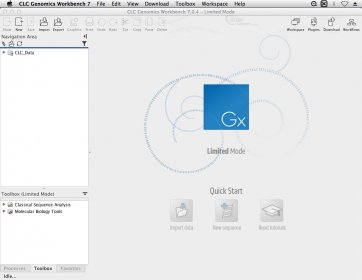
Workbench for advanced DNA, RNA, and protein analyses CLC Main Workbench is a comprehensive workbench for advanced DNA, RNA, and protein analyses allowing you to do gene expression analysis, primer design, molecular cloning, phylogenetic analyses, and sequence data management, amongst a wide variety of other features.
CLC Main Workbench aggregates user friendly gene expression analysis with all features of CLC Protein Workbench, CLC RNA Workbench, and CLC DNA Workbench in one integrated software package.
CLC Main Workbench creates a software environment enabling users to make a large number of advanced DNA, RNA, and protein sequence analyses, combined with gene expression analysis, smooth data management, and excellent graphical viewing and output options.
Features
Main Workbench includes all features from CLC DNA Workbench, CLC RNA Workbench, and CLC Protein Workbench, as well as a range of Gene Expression Analysis - all listed below:
Expression analysis including digital gene expression
* Support for both microarray- and sequencing-based (RNA-Seq) expression data
* Visualization: Interactive heat map, table and scatter plot views
* Transformation and normalization tools
* Quality control tools including principal component analysis, MA- and boxplots
* Experimental design tools for two- or multiple group comparisons
* T-tests and ANOVA analysis with support for paired/repeated measures
* Multiple testing corrected p-values (Bonferroni and/or FDR)
* Clustering algorithms: hierarchical clustering, k-means and Partitioning Around Medoids (PAM) with support for various distance and linkage measures.
* Ability to import NetAffx annotation arrays and adding annotation to experiments
* Tools for Gene Set Enrichment Analysis (GSEA) and for Hyper-Geometric based tests for overrepresented annotation categories (e.g. 'GO'stats or specific protein pathways).
* Ability to work with Expression Arrays and RNA-seq results at the same time, enabling comparison of results
DNA sequence analysis
* Editor for graphically and algorithmically advanced primer design
* In silico PCR
* Assembly of DNA sequence data
* Multiplexing - Process Tagged Sequences has an option to filter away groups with few sequences.
* Molecular cloning
* Gateway Cloning
* Automatic SNP annotation of sequences
* Local complexity region analyses
* Reverse translation from protein to gene, based on translation tables from a number of species
* Advanced restriction enzyme analysis and management
* Dot plot based analyses
* DNA statistics report including a number of characteristics of a given molecule
* NCBI sequence data search
* Access to web info from PubMed
RNA structure analysis
* Secondary structure prediction
* Graphical view and editing of secondary structure
* Tabular view of structures and energy contributions
* Symbolic representation in sequence view
Protein sequence analysis
* Integrated 3D molecule view
* Transmembrane helix prediction
* Antigenicity
* Secondary protein structure prediction
* PFAM domain search
* Web-based prediction of signal peptides and their cleavage sites (SignalP located on http://www.cbs.dtu.dk/services/SignalP/)
* Hydrophobicity analyses and graphs
* Protein charge analysis and graphs
* Reverse translation from protein to gene (a number of translation tables)
* Interactive translations of DNA and RNA to protein (both single sequences and alignments)
* Proteolytic cleavage detection
* Report of protein statistics (one or more proteins in each report)
* Comprehensive report including a range of protein analyses in one document
Pattern search
* Search for sequence matches
* Motif search for basic patterns
* Motif search using regular expressions
* Motif search with ProSite patterns
* Pattern discovery (unknown patterns)
Database searches
* Web-based sequence search using BLAST
* BLAST on local databases
* Build local BLAST databases
* GenBank Entrez searches
* UniProt searches (SwissProt/TrEMBL)
* PubMed lookup
* Web-based lookup in UniProt, NCBI, and Google
* SNP annotation using BLAST
Project and data management
* Full integration of data input, data management, calculation results, and data export
* Detailed history log
* All types of files can be saved in local projects, and launched from the program
* Import and export of data in a large number of file formats
* Option of working in several active workspaces at a time, enabling simultaneous work on multiple projects
Other bioinformatics features
* DNA, RNA and protein sequence editor displaying both linear and circular molecules
* Multiple alignment of DNA, RNA, and proteins
o Two proprietary algorithms
o ClustalW
o Muscle
o T-Coffee
o MAFFT
o Kalign
* Joining multiple alignments into one
* DNA, RNA, and protein alignment editor
* Interactive logo graphs along both DNA, RNA and Protein alignments
* Batch processing of analyses on multiple sequences in one work-step
* Advanced re-alignment and fix-point alignment option
* Manual annotation of sequences
* Dot plot based analyses
* Local complexity region analyses and complexity plots
* Gap fraction graphs
* G/C content analysis and graphs
* Advanced pairwise comparison
* Extract annotations
CLC Main Workbench creates a software environment enabling users to make a large number of advanced DNA, RNA, and protein sequence analyses, combined with gene expression analysis, smooth data management, and excellent graphical viewing and output options.
Features
Main Workbench includes all features from CLC DNA Workbench, CLC RNA Workbench, and CLC Protein Workbench, as well as a range of Gene Expression Analysis - all listed below:
Expression analysis including digital gene expression
* Support for both microarray- and sequencing-based (RNA-Seq) expression data
* Visualization: Interactive heat map, table and scatter plot views
* Transformation and normalization tools
* Quality control tools including principal component analysis, MA- and boxplots
* Experimental design tools for two- or multiple group comparisons
* T-tests and ANOVA analysis with support for paired/repeated measures
* Multiple testing corrected p-values (Bonferroni and/or FDR)
* Clustering algorithms: hierarchical clustering, k-means and Partitioning Around Medoids (PAM) with support for various distance and linkage measures.
* Ability to import NetAffx annotation arrays and adding annotation to experiments
* Tools for Gene Set Enrichment Analysis (GSEA) and for Hyper-Geometric based tests for overrepresented annotation categories (e.g. 'GO'stats or specific protein pathways).
* Ability to work with Expression Arrays and RNA-seq results at the same time, enabling comparison of results
DNA sequence analysis
* Editor for graphically and algorithmically advanced primer design
* In silico PCR
* Assembly of DNA sequence data
* Multiplexing - Process Tagged Sequences has an option to filter away groups with few sequences.
* Molecular cloning
* Gateway Cloning
* Automatic SNP annotation of sequences
* Local complexity region analyses
* Reverse translation from protein to gene, based on translation tables from a number of species
* Advanced restriction enzyme analysis and management
* Dot plot based analyses
* DNA statistics report including a number of characteristics of a given molecule
* NCBI sequence data search
* Access to web info from PubMed
RNA structure analysis
* Secondary structure prediction
* Graphical view and editing of secondary structure
* Tabular view of structures and energy contributions
* Symbolic representation in sequence view
Protein sequence analysis
* Integrated 3D molecule view
* Transmembrane helix prediction
* Antigenicity
* Secondary protein structure prediction
* PFAM domain search
* Web-based prediction of signal peptides and their cleavage sites (SignalP located on http://www.cbs.dtu.dk/services/SignalP/)
* Hydrophobicity analyses and graphs
* Protein charge analysis and graphs
* Reverse translation from protein to gene (a number of translation tables)
* Interactive translations of DNA and RNA to protein (both single sequences and alignments)
* Proteolytic cleavage detection
* Report of protein statistics (one or more proteins in each report)
* Comprehensive report including a range of protein analyses in one document
Pattern search
* Search for sequence matches
* Motif search for basic patterns
* Motif search using regular expressions
* Motif search with ProSite patterns
* Pattern discovery (unknown patterns)
Database searches
* Web-based sequence search using BLAST
* BLAST on local databases
* Build local BLAST databases
* GenBank Entrez searches
* UniProt searches (SwissProt/TrEMBL)
* PubMed lookup
* Web-based lookup in UniProt, NCBI, and Google
* SNP annotation using BLAST
Project and data management
* Full integration of data input, data management, calculation results, and data export
* Detailed history log
* All types of files can be saved in local projects, and launched from the program
* Import and export of data in a large number of file formats
* Option of working in several active workspaces at a time, enabling simultaneous work on multiple projects
Other bioinformatics features
* DNA, RNA and protein sequence editor displaying both linear and circular molecules
* Multiple alignment of DNA, RNA, and proteins
o Two proprietary algorithms
o ClustalW
o Muscle
o T-Coffee
o MAFFT
o Kalign
* Joining multiple alignments into one
* DNA, RNA, and protein alignment editor
* Interactive logo graphs along both DNA, RNA and Protein alignments
* Batch processing of analyses on multiple sequences in one work-step
* Advanced re-alignment and fix-point alignment option
* Manual annotation of sequences
* Dot plot based analyses
* Local complexity region analyses and complexity plots
* Gap fraction graphs
* G/C content analysis and graphs
* Advanced pairwise comparison
* Extract annotations